

Ever wonder why the thought of losing money feels twice as painful as gaining it, even for smart investors? It’s not just in your head; there’s a fascinating psychology of risk at play that quietly dictates our every financial move, making some of us fear loss far more than others.
👉 Base científica
Este fenômeno foi formalmente descrito por Daniel Kahneman e Amos Tversky na Prospect Theory, demonstrando que perdas são psicologicamente cerca de 2 a 2,5 vezes mais intensas do que ganhos equivalentes.
📎 Estudo original (Princeton):
https://www.princeton.edu/~kahneman/docs/Publications/prospect_theory.pdf
📎 Explicação acessível (Harvard Business Review):
https://hbr.org/2015/01/what-is-loss-aversion
The Roots of Risk Aversion and Loss Aversion
We’ve unpacked how our minds weigh potential losses more heavily than gains.
👉 Confirmação empírica
Pesquisas em behavioral finance mostram que investidores exibem comportamentos sistematicamente inconsistentes com a racionalidade clássica, especialmente em cenários de incerteza.
📎 Revisão académica (Journal of Economic Perspectives):
https://www.aeaweb.org/articles?id=10.1257/jep.21.1.105
📎 Resumo técnico (University of Chicago Booth):
https://www.chicagobooth.edu/review/why-losses-loom-larger-gains
The Brain on Money: Neuroscience of Financial Choices

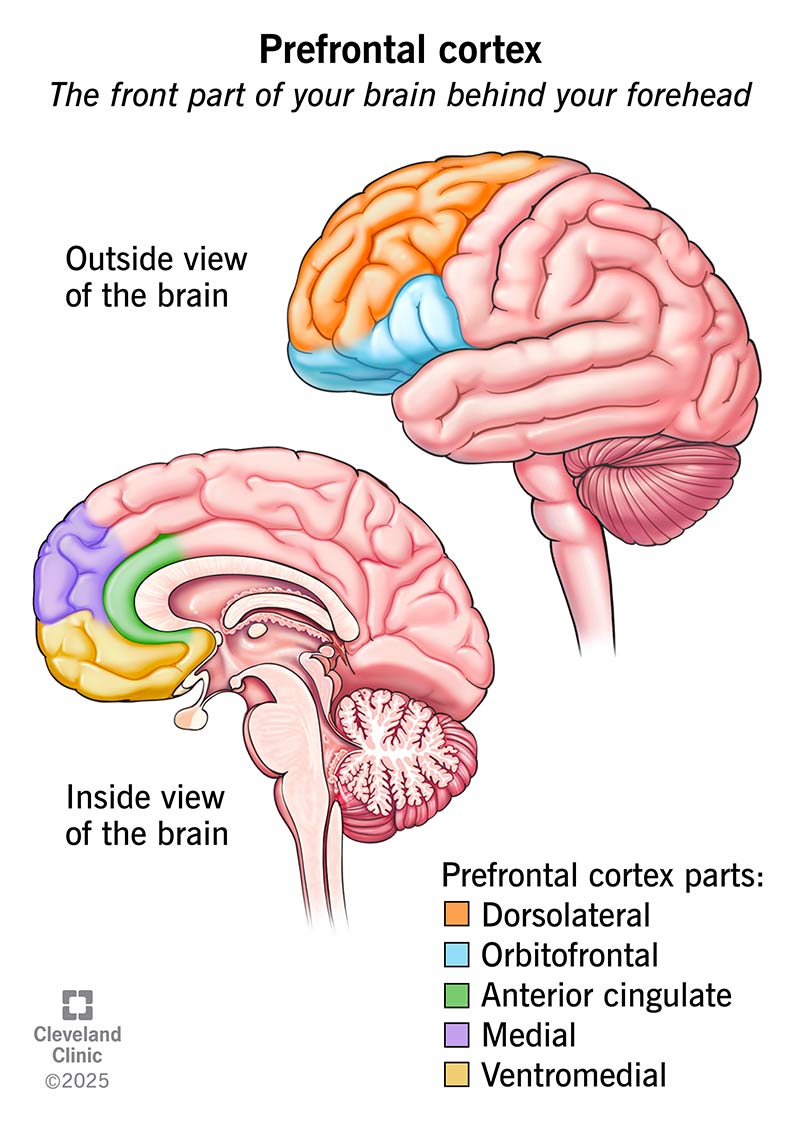
We’ve uncovered the roots of risk aversion and loss aversion, acknowledging these powerful psychological forces.
👉 Neurociência aplicada
Estudos em neuroeconomia mostram que a amígdala é ativada de forma intensa durante perdas financeiras, enquanto ganhos ativam o sistema de recompensa de forma mais moderada.
📎 Estudo publicado na Proceedings of the National Academy of Sciences (PNAS):
https://www.pnas.org/doi/10.1073/pnas.0609513104
📎 Revisão científica (Nature Neuroscience):
https://www.nature.com/articles/nn.3859
Cognitive Biases: Distorting Our Investment Judgments
We’ve explored the brain on money, understanding the neurological roots of our financial fears.
👉 Evidência científica dos vieses
- Endowment Effect: pessoas exigem mais para vender um ativo do que estariam dispostas a pagar por ele
📎 Thaler (Nobel):
https://www.jstor.org/stable/1833044 - Framing Effect: decisões mudam drasticamente conforme a apresentação da informação
📎 Stanford Encyclopedia of Philosophy:
https://plato.stanford.edu/entries/framing/

Behavioral Economics: Bridging Minds and Markets

We’ve dissected cognitive biases that cloud our judgment.
👉 Validação institucional
A economia comportamental é hoje integrada em:
- Bancos centrais (FED, ECB)
- Políticas públicas (nudge theory)
- Gestão profissional de investimentos
📎 Nobel Prize – Behavioral Economics Overview:
https://www.nobelprize.org/prizes/economic-sciences/2002/popular-information/
📎 OECD – Behavioral Insights in Finance:
https://www.oecd.org/finance/behavioral-economics.htm
How Fear of Loss Shapes Investment Strategies
We’ve explored behavioral economics, bridging the gap between our minds and markets.
👉 Dados históricos
Estudos mostram que investidores individuais:
- Vendem mais em quedas do que em altas
- Subperformam índices por 2–4% ao ano devido a decisões emocionais
📎 DALBAR Quantitative Analysis of Investor Behavior:
https://www.dalbar.com/QAIB
📎 Vanguard – Behavioral Alpha:
https://institutional.vanguard.com/insights-and-research/perspective/behavioral-alpha.html
Personal History: The Silent Architect of Risk Perception

We’ve seen how fear of loss shapes investment strategies.
👉 Evidência longitudinal
Experiências económicas precoces moldam a tolerância ao risco por décadas.
📎 Estudo (American Economic Review):
https://www.aeaweb.org/articles?id=10.1257/aer.101.3.397
Overcoming Loss Aversion: Strategies for Investors
We’ve seen how personal history and innate biases shape why some investors fear loss more than others.
👉 Comprovação empírica das estratégias
- Dollar-Cost Averaging reduz stress e erros de timing
📎 Vanguard Research:
https://corporate.vanguard.com/content/corporatesite/us/en/corp/articles/dollar-cost-averaging-just-means-taking-risk-later.html - Diversificação reduz volatilidade sem sacrificar retornos
📎 Markowitz Portfolio Theory:
https://www.investopedia.com/terms/m/modernportfoliotheory.asp
Building Resilience: A Balanced Approach to Risk
We’ve explored myriad strategies for overcoming loss aversion.
👉 Consenso académico
Educação financeira + autoconsciência emocional = melhores resultados de longo prazo.
📎 CFA Institute – Investor Behavior:
https://www.cfainstitute.org/en/research/foundation/2015/behavioral-finance
Final Thoughts: Mastering Your Money Mindset
We’ve journeyed deep into the psychology of risk, uncovering why some investors fear loss more than others and the profound impact this has on our financial life. From the neurological wiring of our brains to the subtle nudges of cognitive biases and the indelible marks of personal history, it’s clear that our relationship with money is far more complex than mere numbers. The core takeaway? Acknowledging your inherent tendency to fear loss is not a weakness, but the first step toward genuine strength and a more prosperous financial future.
Mastering your money mindset is an ongoing process, not a destination.
Understanding personal biases and developing robust strategies to manage them are paramount for long-term financial success. We’ve explored practical tools, from setting clear investment plans and dollar-cost averaging to embracing diversification and fostering emotional regulation. These aren’t just theoretical concepts; they are the actionable safeguards that empower investors to make rational decisions even when the market’s turbulence triggers their deepest anxieties. It’s about building a framework that allows your logical self to prevail over your emotional impulses.
Looking ahead, the world of investing and finance psychology demands continuous learning and adaptation. Markets evolve, economic conditions shift, and our personal circumstances change. Staying informed, regularly assessing your own biases, and being open to adjusting your strategies are vital for sustained success. By consistently working to understand and master the psychology of risk, you not only mitigate the detrimental effects of fear loss but also cultivate the resilience needed to build the lasting wealth you truly deserve.
We’ve reached the End
We’ve seen that fearing loss is a natural part of investing. By understanding our biases and using strategies like clear goals, dollar-cost averaging, and diversification, we can conquer emotional impulses.
Start building your financial resilience today! Share your thoughts on how you manage risk in the comments below.
FAQ Questions and Answers about The Psychology of Risk
FAQ Questions and Answers about The Psychology of Risk
We’ve gathered the most frequent questions so you leave here without any doubt about the psychology of risk.
What is the core idea behind ‘The Psychology of Risk’ in investing?
The core idea is that the emotional pain of losing money feels significantly stronger than the pleasure of gaining an equivalent amount. This fundamental human tendency, known as loss aversion, heavily influences our financial decisions and explains why we might fear loss more than gain.
How do risk aversion and loss aversion differ, and why is this important for investors?
Risk aversion is a general preference for a sure outcome over a gamble, while loss aversion is the more powerful tendency where the pain of losing a specific amount is psychologically greater than the joy of gaining the same amount. Understanding this difference helps investors recognize why they might cling to losing assets or avoid promising opportunities due to an amplified fear of loss.
How do our brains contribute to why some investors fear loss more than others?
Our brains have an ancient wiring where the amygdala (fear center) reacts instinctively to potential financial threats, creating an immediate urge to protect. This primal response often overrides the rational analysis of the prefrontal cortex, explaining why our fear loss can be so potent and disproportionate among investors.
What role do cognitive biases play in distorting investment judgments related to the psychology of risk?
Cognitive biases are mental shortcuts that can distort our judgment. For instance, the endowment effect makes us overvalue assets we own, and the framing effect changes our perception based on how information is presented, both amplifying our innate fear loss and leading to suboptimal investment decisions.
What practical strategies can investors use to overcome their fear of loss?
To overcome fear of loss, investors can set clear investment goals and plans, implement dollar-cost averaging to invest regularly, and use diversification to spread risk. Developing emotional regulation skills and seeking professional advice also provide a rational anchor against impulsive reactions triggered by the psychology of risk.